Muffin
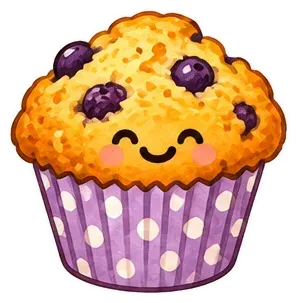
A small, moist cake with a domed top, baked in a paper case. The batter is simple, and what goes into it is what makes each muffin different.
- Taste
- sweet
- Texture
- soft, juicy




Read aloud to your child
A muffin is a small, moist cake baked in a paper case, with a high, round top that bulges up. It tastes sweet and can have chocolate, blueberries or other good things in it. Feel the soft top and the tiny crumbs. Maybe you can eat it without losing a single crumb.
A muffin is barely a recipe. It is a simple batter of flour, egg, milk, butter and sugar, and then it is up to you what goes in. Blueberries, banana, apple, chocolate, carrot. That makes muffins one of the best things to bake with a child who is curious, or cautious.
The batter stays the same
The basic batter is mild and sweet and comes out soft and moist. The top domes in the oven and turns slightly crisp, while the inside stays light. The paper case has to come off before eating, and many children treat peeling it away as a small job of its own.
Once the plain batter is familiar, it can carry something new. That is the point. Your child knows how a muffin tastes, so only one thing is new.
What your child sees going in
There is a difference between hiding food and baking with it. When your child grates a carrot and stirs it into the batter themselves, they know there is carrot in the muffin. When they drop blueberries into each case, they know where the berries are. No tricks, and the food becomes familiar because they were part of it.
Hidden vegetables are something else. A child who eats a muffin without knowing there is courgette in it has not tasted courgette. They have tasted muffin. And if they find out later, they may become warier of both.
So let your child see everything. Hold up the carrot before it is grated. Feel the banana before it is mashed. Taste a blueberry before it goes in the case.
One thing at a time
If your child is unsure, bake a tray with several kinds. Some plain, some with blueberries, some with banana. Mark them with a cocktail stick or a scrap of paper. Your child can start with a plain one and perhaps try a bite of another.
Blueberries turn purple and soft in the oven and stain the batter around them. Banana makes the muffin extra moist and a little chewy. Carrot leaves thin orange threads and a sweetness few would guess. Each one is a small new thing to notice.
The case and the top
Plenty of children eat a muffin in a set order. Some go for the top first, the crisp domed bit. Others peel the case and start from the bottom, where it is moistest. There is no need to correct it. The order is your child’s way of staying in charge, and it makes a muffin with something new inside easier to try.
From muffin to fruit
If your child likes blueberry muffins, blueberries straight from the bowl are a natural next step. Banana and carrot have pages of their own. And a cinnamon roll is another bake you can make together.
A bite of a muffin with something new inside earns a star in Mumse, and your child can find the new thing there as a food of its own.
 Blueberry
 Apple cake
 Banana
 Doughnut
 Chocolate