Gummy bears
Tiny bears in red, yellow, green and orange, shiny and almost see-through. Each colour is meant to taste of something different. Telling them apart is harder than you would think.
- Taste
- sweet
- Texture
- chewy



Read aloud to your child
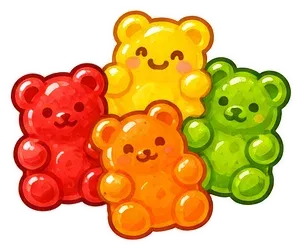
Gummy bears are chewy sweets shaped like tiny bears, and they come in red, yellow, green and orange. They are shiny and almost see-through, so the light shines through them. When you chew, they are soft and stretchy and taste sweet and fruity. Each colour has its own flavour. Which colour will you eat first, and can you guess the taste?
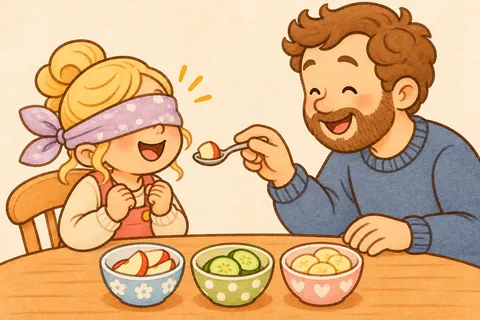
Cover your eyes. Open your mouth. Which colour is it?
This game works almost every time, and it is harder than it sounds. Gummy bears are supposed to taste different by colour, but once you cannot see the colour it turns into a lot of guessing. Adults included.
Small bears from Germany
Gummy bears were first made in Germany about a hundred years ago, and today they sit on sweet shelves across much of the world. They are made of sugar, syrup, flavouring, colouring and usually gelatine, which gives them the chew. Some versions use starch or pectin instead.
Many gummy bears are firmer than the soft Norwegian gummy men. They need a bit more chewing and keep their shape longer in the mouth. Look closely and you will find ears, arms and a little round tummy. Hold one up to the window and the light comes through.
Your eyes taste too
Colour decides a lot of what we expect to taste. A red bear ought to taste of berries. A yellow one ought to taste of lemon. With eyes closed, only the tongue and nose are left, and suddenly the flavours seem much more alike.
The game is simple. One person covers their eyes, the other hands over a bear. Guess the colour. Swap. Getting it right does not matter. The point is that your child pays attention, and finds out that taste is more than what you see.
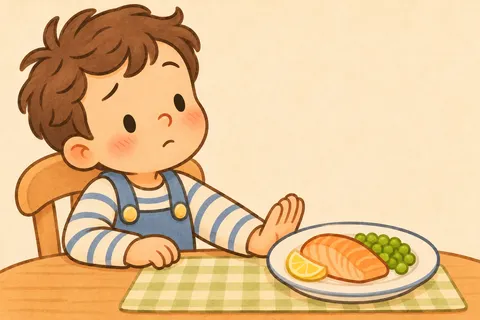
That goes for all food. A child who has decided something is horrible because it is green might find it useful to know that eyes are sometimes wrong.
A bear in a glass of water
Drop a gummy bear into a glass of cold water and leave it overnight. In the morning it is bigger, paler and rather limp. The gelatine has soaked up water. Put a fresh bear beside it and compare.
Your child can prod the swollen bear, and some will want to taste it. It tastes of almost nothing and feels like jelly. It is a small experiment that says a lot about what a gummy bear actually is.
Chewy, slippery and small
Whole gummy bears can get stuck in a small child’s throat, so for the youngest it makes sense to cut them up, and your health visitor can tell you what suits which age.
The chewiness is also why some children are not keen. It takes a while, and the piece hangs about. That is a reaction to texture. Nothing needs fixing, but it is worth noticing whether your child reacts the same way to other chewy foods.
Which colour first
Lots of children have a favourite colour in the bag, and some always sort before eating. Sorting is a good thing in itself. It gets a child looking at food, counting and talking about it without anyone asking for anything.
Other chewy, fruity things
Gummy men are the Norwegian relatives, softer and bigger. Jelly has the same gelatine but is smooth and wobbly. Sour sweets often hide a chewy middle under a sour coat. And a real raspberry is what many red bears are trying to taste like.
Gummy bears are among the sweets in Mumse. If your child guessed the wrong colour, it still counted as tasting, and the star is the same.
 Jelly
 Sour sweets
 Red liquorice
 Ice lolly
 Popcorn