Pesto pasta
Pasta is safe. Green often isn't. Pesto pasta puts the two together, and that is where many children stop and give the plate a second look.
- Taste
- salty, mild, savoury
- Texture
- smooth, soft




Read aloud to your child
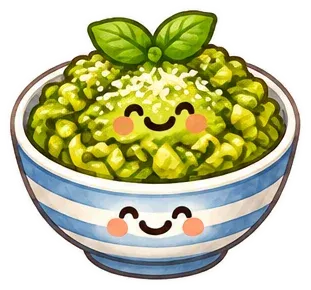
Pesto pasta is pasta with a green sauce made from basil, oil, cheese and nuts. It comes from the city of Genoa in Italy. The pesto smells fresh and herby and is a little bit salty. It turns the pasta green and shiny. Did you know the green is basil leaves crushed in a mortar?
Green on the pasta
Many children have feelings about green food. It isn’t always the taste. It is the colour. Green often means vegetables, and vegetables often mean something they have refused before.
That makes pesto pasta an interesting dish. The pasta is familiar and safe. The pesto turns it green. And suddenly the whole plate looks unfamiliar.

The taste
Pesto is basil, olive oil, garlic, Parmesan and nuts. It smells fresh and herby. It tastes salty and rich, with a round cheesy flavour and a sharp edge of garlic.
On the pasta the pesto spreads thin and glossy. Each mouthful tastes more of pasta than pesto, especially if there isn’t much pesto.
A little at a time
Start with very little. Cook the pasta and let your child stir in a small teaspoon of pesto themselves. The pasta goes pale green rather than dark, and the taste is mild.
Next time a bit more. Your child decides.
You can also leave the pasta plain and put the pesto in its own bowl. Your child can dip a piece of pasta, or not.
Pound it yourself
The name comes from an Italian word for pounding or crushing. Pesto was first made in a mortar, a heavy bowl with a pestle, where the leaves were crushed into a green paste.
If you have a mortar, this is something your child can do. Put basil leaves, a pinch of salt and some grated cheese in, and let them pound. It smells strong. The leaves go dark and wet. In the end it is pesto.
A child who made the pesto knows exactly what is in it. That makes it less scary.
Smell the basil
Basil is a herb with a strong, sweet smell. Take a leaf, rub it between your fingers and sniff. It smells of pesto. Your child can taste a leaf on its own and notice that it is a bit sweet and a bit peppery.
If you have a basil plant on the windowsill, your child can pick the leaves themselves.
From Genoa
Pesto comes from Genoa, a port city in north-west Italy. There it is made with a small-leaved basil and is often served with potatoes and green beans mixed into the pasta. It is everyday food.
In Norway, as in Britain, pesto pasta has become a family standby. It is quick, and many children who love pasta will give it a go.
Red pesto and other pestos
Pesto doesn’t have to be green. Red pesto is made from sun-dried tomatoes and tastes sweeter, more like tomato. It can be a way in for a child who likes tomato sauce but stops at green. There is also pesto made from rocket, kale and spinach.
Pesto usually contains nuts, most often pine nuts or cashews. It says so on the jar, and nut-free versions exist.
From jar to mortar
Pesto can be tasted on its own too, on bread or as a dip for vegetables. Spaghetti bolognese is pasta with a completely different sauce, red and full of meat.
Pesto pasta is on the pasta, rice and noodles shelf in Mumse. A pale green bite earns just as much of a star as a dark green one. About Mumse.
 Pesto
 Pasta with tomato sauce
 Basil
 Chicken pasta
 Peas
 Bruschetta