What counts as a correctly formed letter?
I set out to make a writing app for my daughters, and found out I'd been writing the Norwegian ø wrong my whole life.
Our eldest daughter wanted to write cards to her grandparents. She asked us to write the words on a sheet of paper so she could copy them. That turned into a lot of sheets.
So I went looking for an app. Most of what I found was American, with annoying characters and a lot of nagging. And I wanted her to learn the letters the way she’ll meet them when she starts school next autumn. The Norwegian way, that is, with æ, ø and å. I thought I’d just make one myself. How hard could it be. I just had to find out what’s actually correct first.
What do the schools say?
The Norwegian curriculum doesn’t say which style of handwriting children should learn. It says they should have “functional handwriting”, and that’s about it. There used to be a requirement for a specific style, but it was dropped in 2020.
The closest thing to an official answer is a set of instructional videos the Norwegian Reading Centre made for teachers. They go through every letter, where you start and which way you go, and a lot of schools follow them.
I watched the videos and had a few surprises, the biggest one being ø (an o with a slash through it). The slash in ø is supposed to go from the bottom up. I’ve drawn it from the top down my whole life.
The reason is that children later move on to joined-up writing. A stroke that goes up becomes the start of the next letter. So it does matter which way you go, even if the ø looks the same once it’s done.
Strict about the start
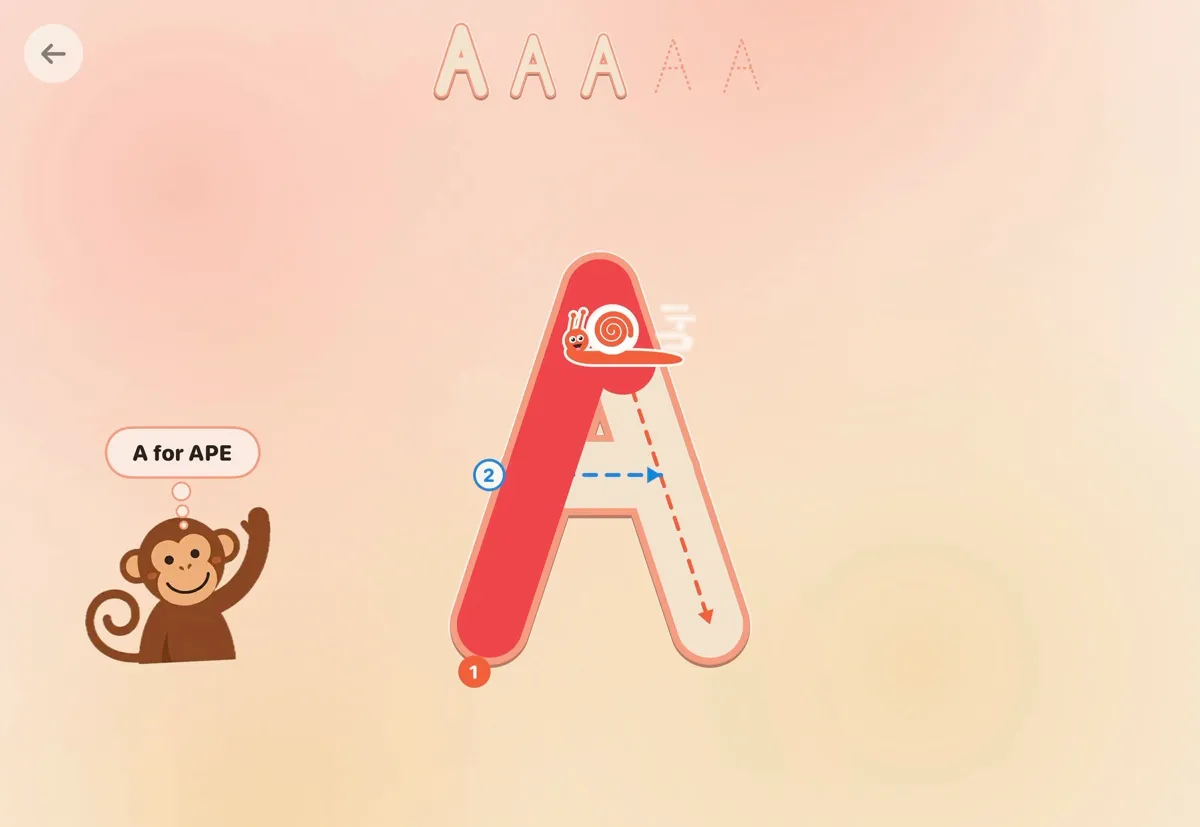
That more or less became the rule for the whole app: Snirkel is strict about where the finger goes down and which way it moves, and relaxed about how neat the line turns out.
In Snirkel, a snail shows where the letter starts and crawls along with the finger. If the child starts in the wrong place, the snail looks puzzled, says “hm?”, and the letter gives a gentle shake. There’s never an error sound. If the finger goes the wrong way, nothing happens at all, and the child works it out on their own.
The starting dot is never smaller than a fingertip, however thin the track (the pale letter the child traces over) gets. Hitting a tiny dot isn’t what they’re practising. And if the finger slips off right at the end of a stroke, the stroke still counts. Nobody should have to start again because of the last few millimetres.
She wanted it harder
The first version was too easy. My five-year-old wanted it harder than I’d made it, so I changed the app.
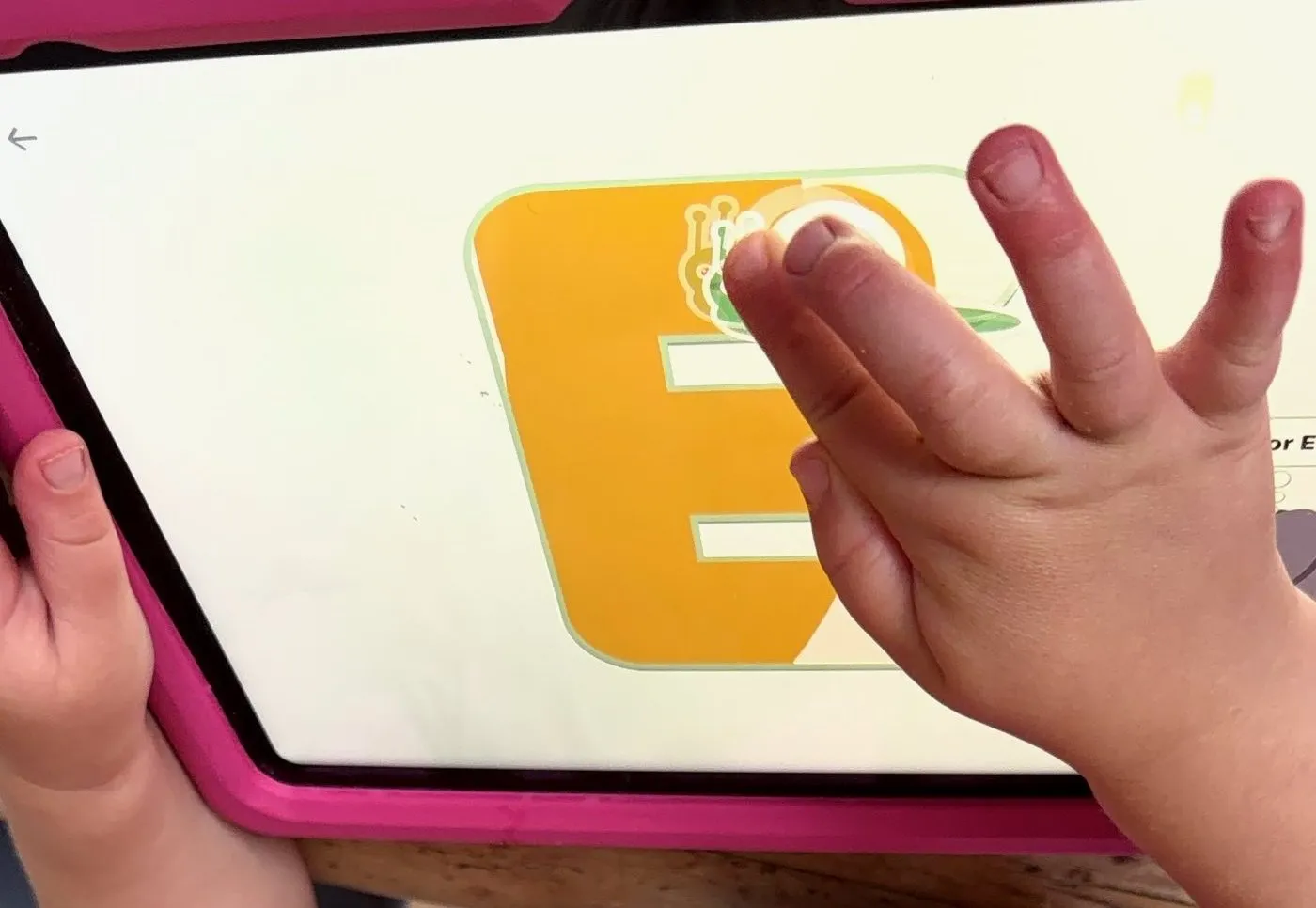
Now the child writes each letter five times, and the track gets a little narrower each time, so you have to be more careful. At first you can lift your finger and carry on where you stopped. Once you’ve written the letter a few times, each stroke has to be done in one go. And for the last two rounds the track is gone, and there’s only a thin dotted line to follow.
The track was also too wide to begin with. The holes in a and e almost disappeared, and it was more a blob to colour in than a letter to write. It’s a quarter narrower now.
If a child has tried the same letter three times in a day without finishing, the track gets wider next time, and the rounds without a track are skipped. The app doesn’t say anything about it; it just gets a bit easier.
The little one would rather colour
When my three-year-old tried the same thing, it was far too hard. She doesn’t have the finger control yet. So she got a mode of her own, where she can draw freely and colour in the letters, and it turned into a way of playing with letters. She loved it. She filled up the whole shelf with letters before I’d really noticed. She’s quick.
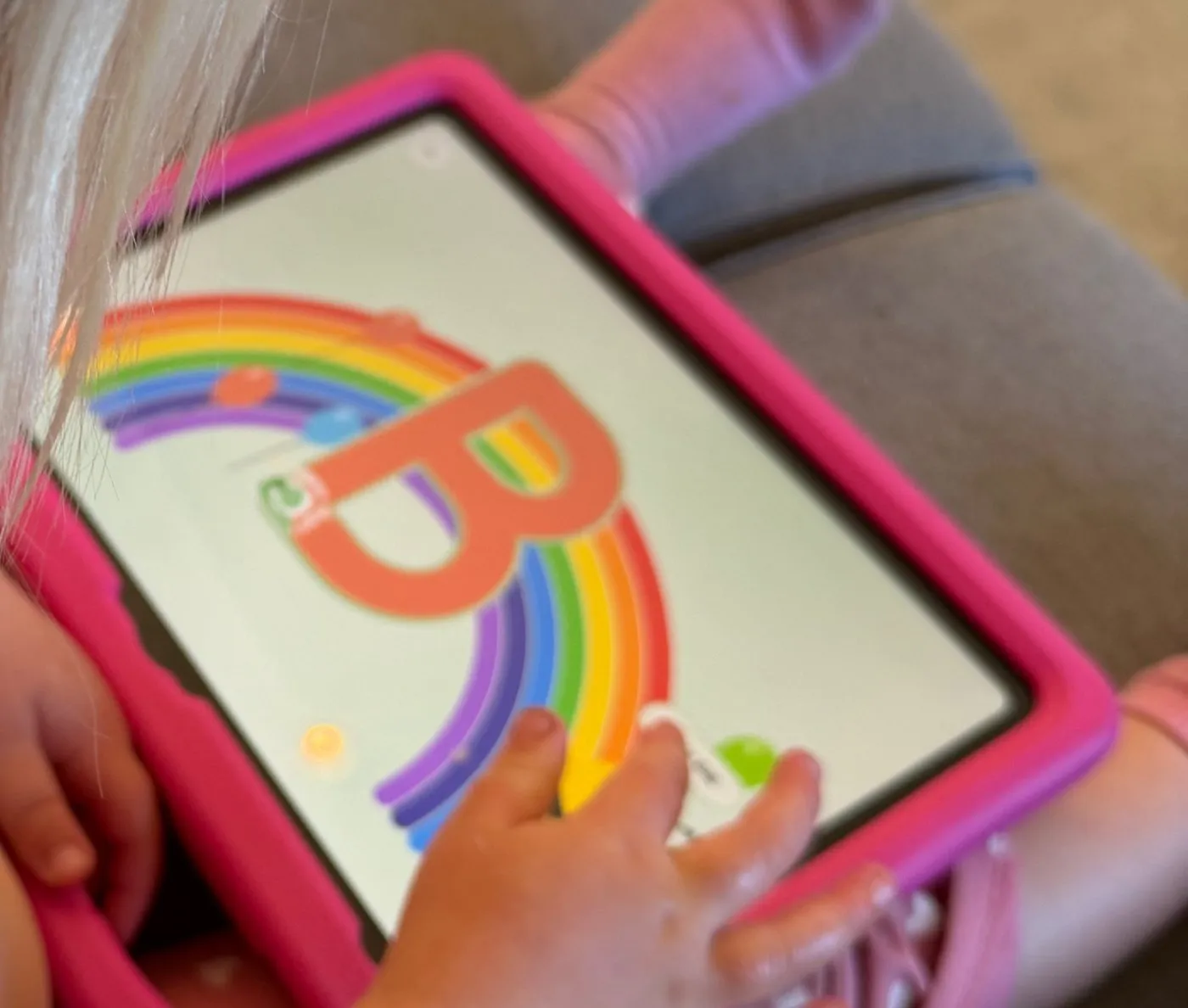
So now Snirkel has three levels, and you pick one for each child. The first one is hers: the child colours in the letter in whatever order they like, just to get to know the shape. The second is capital letters, with the right start and direction, because from what I’ve seen, capitals are what most children learn first. On the third, the child switches between capital and small letters.
There are no points and no stars to collect. When a letter is done there’s a little celebration, it goes up on a shelf in the app, and that’s it.
And then paper
Children should write on paper too, not just on a screen. You hold a pencil differently, and it catches on paper in a way glass never does. Snirkel can teach where a letter starts and which way it goes, but the rest has to be practised on paper.
So at home they write on paper too. We’ve made a set of sheets with the letters, laminated them, and the girls write on them with whiteboard markers. The plan is that you’ll be able to download the sheets and print them yourself from the app in the next update. Stay tuned.
I’m not a teacher. I’ve read what I’ve found about handwriting in Norwegian schools and followed it as closely as I can, but I’m sure there’s something I’ve misunderstood. If you spot anything, I’d like to hear about it.
The app is in Norwegian, made for Norwegian families.